Indigenous trade at the heart of South America
North Korea, officially known as the Democratic People's Republic of Korea (DPRK), is a country located in East Asia on the northern part of the Korean Peninsula. It is known for its totalitarian regime, nuclear ambitions, and significant human rights issues.
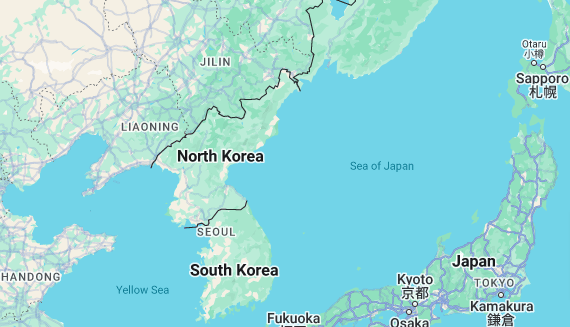
Geography
Location: Bordered by China to the north, Russia to the northeast, and South Korea to the south. The Yellow Sea lies to the west, and the Sea of Japan to the east.
Area: Approximately 120,538 square kilometers (46,541 square miles).
Natural Features: The country is mountainous, with the Paektu Mountain range being a significant feature. It has a temperate climate, with distinct seasons.
History
Colonial Era: Korea was annexed by Japan in 1910 and remained under Japanese rule until the end of World War II in 1945.
Division and War: After WWII, Korea was divided along the 38th parallel into Soviet and American zones of influence, leading to the establishment of North Korea and South Korea. The Korean War (1950-1953) solidified this division.
Regime: Since its establishment, North Korea has been ruled by the Kim family, with Kim Il-sung being the founder. His son, Kim Jong-il, and grandson, Kim Jong-un, have continued the dynastic leadership.
Political System
Government: North Korea is a one-party state dominated by the Workers' Party of Korea. It is known for its authoritarian regime and extensive control over all aspects of life, including media, education, and public expression.
Nuclear Program: The country has pursued nuclear weapons development, leading to international sanctions and tensions, particularly with the United States and South Korea.
Economy
Economic Structure: North Korea's economy is state-controlled, with limited market reforms. Agriculture, military production, and heavy industry are key sectors.
Challenges: The economy faces severe challenges due to mismanagement, sanctions, and natural disasters, leading to food shortages and poverty. Estimates suggest that a significant portion of the population suffers from malnutrition.
Culture
Art and Propaganda: North Korean culture is heavily influenced by state ideology, with art and literature serving as propaganda tools. The regime promotes a cult of personality around its leaders.
Education and Ideology: Education in North Korea emphasizes loyalty to the regime and the teachings of Kim Il-sung and Kim Jong-il, often referred to as Juche (self-reliance).
Human Rights
Conditions: North Korea has one of the worst human rights records in the world. Reports of severe restrictions on freedom of speech, assembly, and religion are widespread, along with forced labor camps for political prisoners.
Recent Developments
International Relations: North Korea's relationships with other countries remain tense, especially concerning its nuclear capabilities and military activities. The country often engages in provocative actions, including missile tests.
COVID-19 Pandemic: The pandemic has further isolated North Korea, which had closed its borders to prevent the spread of the virus, leading to economic hardship.
Copyright (C) S. Midttun, 2024