Indigenous trade at the heart of South America
Iraq, officially known as the Republic of Iraq, is a country located in the Middle East. It is known for its rich history, being part of the cradle of civilization, with Mesopotamia located between the Tigris and Euphrates rivers. Ancient cities like Babylon, Ur, and Nineveh were centers of early human civilization.
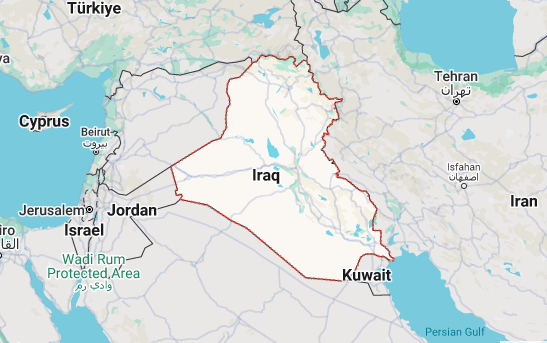
Key Facts
Capital: Baghdad
Population: Approximately 44 million (as of 2023)
Official Language: Arabic and Kurdish
Currency: Iraqi Dinar (IQD)
Government: Federal parliamentary republic
President: Abdul Latif Rashid (as of 2023)
Prime Minister: Mohammed Shia' Al Sudani (as of 2023)
Geography
Iraq borders Turkey, Iran, Kuwait, Saudi Arabia, Jordan, and Syria. It has diverse geography, including deserts, fertile plains, and mountains. The Tigris and Euphrates rivers are vital to the country's agriculture and economy.
Historical Background
Iraq has a history dating back thousands of years, with the region being a part of some of the earliest human civilizations. Some important historical periods include:
Sumerians, Akkadians, and Babylonians: Mesopotamia, located in present-day Iraq, is considered one of the birthplaces of civilization. The Sumerians were the first to create a complex urban society.
Islamic Golden Age: Baghdad was the center of the Islamic world during the Abbasid Caliphate (8th to 13th century), fostering advancements in science, mathematics, and literature.
Ottoman Empire: From the 16th century until the end of World War I, Iraq was part of the Ottoman Empire.
Modern Iraq: After World War I, Iraq was created as a mandate of the League of Nations under British administration and gained formal independence in 1932.
Recent History and Conflicts
Iraq's modern history has been turbulent, marked by coups, wars, and international conflicts.
Ba'ath Party and Saddam Hussein: The Ba'ath Party came to power in 1968, and Saddam Hussein took control in 1979. His authoritarian rule was marked by human rights abuses, economic problems, and conflicts.
Iran-Iraq War (1980-1988): This prolonged war caused massive casualties and economic damage.
Gulf War (1990-1991): After Iraq invaded Kuwait, a U.S.-led coalition intervened, and Iraq suffered defeat.
2003 U.S.-Led Invasion: The invasion, which toppled Saddam Hussein, led to years of occupation and instability. This also triggered sectarian violence, insurgency, and the rise of terrorist groups like ISIS.
ISIS Insurgency: In 2014, ISIS captured large parts of Iraq, including Mosul. A long campaign involving both local and international forces eventually defeated ISIS in Iraq by 2017, but the group continues to pose a threat.
Economy
Iraq has a mixed economy, heavily dependent on oil exports, which account for the majority of its revenue. However, the country faces numerous challenges, including corruption, weak infrastructure, and political instability.
Oil Reserves: Iraq holds some of the world’s largest oil reserves, primarily located in the southern and northern parts of the country.
Reconstruction: Years of war and sanctions have severely damaged Iraq’s economy and infrastructure. Rebuilding efforts have been slow and hindered by political dysfunction and ongoing conflicts.
Culture
Iraq’s culture is deeply rooted in its ancient history and Islamic traditions.
Language: Arabic is the main language, and Kurdish is also official in the Kurdistan region. Other minority languages, such as Turkmen, Assyrian, and Armenian, are spoken by various ethnic groups.
Religion: Islam is the dominant religion, with the majority of Iraqis being Shi'a Muslims, though there is a significant Sunni minority. The country also has a small number of Christians, Yazidis, and other religious groups.
Cultural Contributions: Iraq has a rich tradition in literature, music, and architecture. Baghdad, during the Islamic Golden Age, was a hub for scholars, poets, and philosophers.
Politics
Iraq’s political system is a federal parliamentary republic. The country's politics are highly sectarian, with tensions between the Shi'a, Sunni, and Kurdish populations.
Kurdistan: The Kurdish region in the north has autonomy and its own government, the Kurdistan Regional Government (KRG).
Challenges: Iraq's government has struggled to maintain stability, with ongoing insurgency threats, corruption, and disputes over territory and oil revenues between Baghdad and the KRG.
Key Cities and Landmarks
Baghdad: The capital and largest city, historically significant during the Islamic Golden Age.
Basra: Iraq’s main port city, located near the Persian Gulf, is vital for oil exports.
Mosul: Iraq’s second-largest city, heavily damaged during the battle against ISIS.
Babylon: The ancient city, once a center of Mesopotamian civilization.
Erbil: The capital of the Kurdistan Region, with a history that dates back to antiquity.
Iraq Today
Iraq is slowly recovering from decades of conflict, but it faces ongoing challenges, including political instability, economic dependence on oil, and security concerns. Despite these issues, the country retains a rich cultural heritage and remains geopolitically significant in the Middle East.
Copyright (C) S. Midttun, 2024