Indigenous trade at the heart of South America
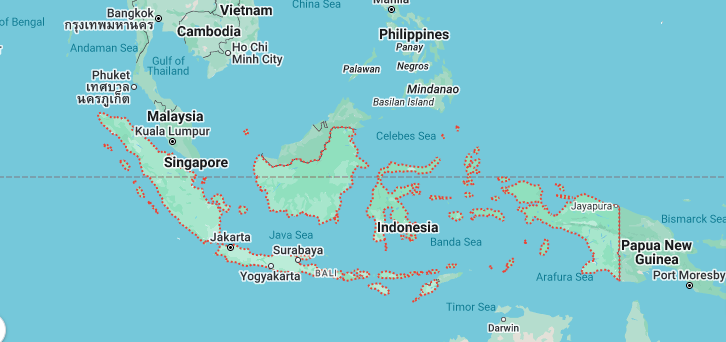
Indonesia is a large and diverse Southeast Asian nation made up of thousands of islands. It is the world’s largest archipelago and the fourth most populous country. Indonesia is known for its rich cultural heritage, unique biodiversity, and growing economic influence.
Key Facts
Capital: Jakarta
Population: Over 270 million (2023 estimate)
Official Language: Indonesian (Bahasa Indonesia)
Currency: Indonesian Rupiah (IDR)
Government: Presidential Republic
President: Joko Widodo (as of 2023)
Geography
Indonesia is made up of around 17,000 islands, with the largest ones being Sumatra, Java, Borneo (shared with Malaysia and Brunei), Sulawesi, and New Guinea (shared with Papua New Guinea).
Major Islands: Java, Sumatra, Borneo (Kalimantan), Sulawesi, Papua
Volcanoes: Indonesia is part of the Pacific "Ring of Fire," making it home to numerous active volcanoes, including Mount Merapi and Mount Bromo.
Biodiversity: Indonesia is one of the most biologically diverse countries, with rainforests, coral reefs, and unique species like the orangutan, Sumatran tiger, and Komodo dragon.
History
Early Civilizations: Indonesia’s history dates back thousands of years, with early kingdoms such as Srivijaya and Majapahit playing a prominent role in regional trade and culture.
Colonial Period: From the 16th century onwards, Indonesia became a major target for European colonial powers, particularly the Dutch. The Dutch East India Company controlled much of Indonesia for centuries before it became a Dutch colony known as the Dutch East Indies.
Independence: Indonesia declared independence from the Netherlands on August 17, 1945, after a brief Japanese occupation during World War II. Sukarno became Indonesia's first president.
Modern Era: Indonesia has experienced significant political and economic changes, including the fall of the authoritarian regime of Suharto in 1998 and the subsequent transition to democracy.
Economy
Indonesia has one of the largest economies in Southeast Asia and is classified as an emerging market.
Major Industries: The economy is driven by agriculture (palm oil, rubber, coffee), manufacturing (textiles, automotive, electronics), and mining (coal, tin, nickel). The country is also a leading exporter of natural resources like oil, gas, and timber.
Tourism: Indonesia is famous for its tourist destinations such as Bali, Yogyakarta, and Raja Ampat.
Challenges: Despite its growth, Indonesia faces issues such as income inequality, infrastructure deficits, and environmental degradation.
Culture and Society
Indonesia is incredibly diverse, with over 300 ethnic groups and 700 languages spoken across the islands.
Major Religions: Islam is the dominant religion, making Indonesia the largest Muslim-majority country in the world. Other religions include Christianity, Hinduism (especially in Bali), and Buddhism.
Cultural Traditions: Indonesian culture varies from region to region, with influences from indigenous traditions, Hindu-Buddhist kingdoms, Islam, and Western colonialism. The gamelan music ensemble and wayang shadow puppetry are important aspects of Indonesian cultural heritage.
Cuisine: Indonesian cuisine is diverse, featuring dishes such as nasi goreng (fried rice), rendang (spicy meat dish), and satay (skewered grilled meat).
Politics and International Relations
Indonesia is a founding member of the Association of Southeast Asian Nations (ASEAN) and plays a significant role in regional diplomacy and trade. The country has pursued a policy of non-alignment and maintains diplomatic ties with many nations.
Environment and Biodiversity
Indonesia's rainforests are home to some of the world’s most diverse ecosystems. However, deforestation, largely driven by logging and palm oil plantations, poses a threat to its biodiversity. The government and international organizations are working to address these environmental challenges.
Key Challenges
Corruption: Indonesia struggles with corruption at various levels of government.
Environmental Issues: Deforestation, pollution, and climate change impact Indonesia's environment, particularly in regions like Sumatra and Kalimantan.
Infrastructure: While Indonesia has made significant progress, rural areas still suffer from poor infrastructure, affecting education and healthcare.
Famous Landmarks
Borobudur Temple: A massive 9th-century Buddhist temple in Central Java.
Prambanan Temple: A 9th-century Hindu temple complex near Yogyakarta.
Komodo National Park: Known for its unique Komodo dragons.
Mount Bromo: An active volcano in East Java.
Ubud, Bali: Known for its arts and culture.
Indonesia's size, diversity, and strategic location make it a critical player in Southeast Asia, with a rich cultural heritage and growing global influence.
Copyright (C) S. Midttun, 2024