Indigenous trade at the heart of South America
India is a vast and diverse country in South Asia, known for its rich history, cultural diversity, and rapid economic growth. It is the seventh-largest country by land area and the most populous country as of 2023, surpassing China.
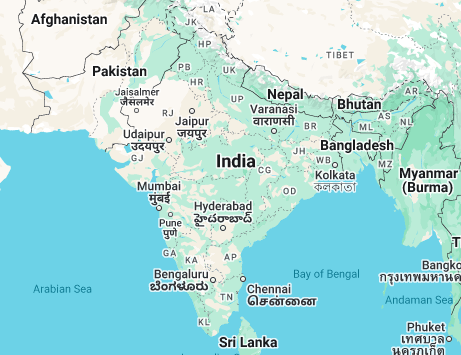
Key Facts
Capital: New Delhi
Largest City: Mumbai
Population: Over 1.4 billion
Official Languages: Hindi and English (several regional languages)
Currency: Indian Rupee (INR)
History
India's history is one of the most ancient in the world, dating back to the Indus Valley Civilization (circa 3300 BCE), one of the earliest urban civilizations.
Ancient India: India was home to advanced civilizations like the Vedic civilization, which laid the foundations of Hinduism, and the Maurya and Gupta empires, which are often considered the golden ages of Indian culture and science.
Medieval India: Several dynasties, such as the Delhi Sultanate and the Mughal Empire, ruled India. The Mughals, in particular, left a lasting impact on Indian art, culture, and architecture (e.g., the Taj Mahal).
Colonial Period: In the 18th century, India fell under British colonial rule, which lasted until 1947. The colonial period saw significant economic exploitation but also laid the groundwork for modern education and legal systems in India.
Independence Movement: Under leaders like Mahatma Gandhi and Jawaharlal Nehru, India gained independence from Britain in 1947, following a nonviolent resistance movement.
Political Structure
India is a federal parliamentary democratic republic. The President is the ceremonial head of state, while the Prime Minister is the head of government. The country has a multi-tiered system of governance, with power shared between the central and state governments.
Current Prime Minister: Narendra Modi (as of 2023)
Current President: Droupadi Murmu
Economy
India has one of the largest economies in the world and is known for its rapid growth in recent decades.
Major Sectors: Agriculture, manufacturing, services, and information technology (IT). India is one of the world's largest producers of textiles, steel, and pharmaceuticals. The IT sector, centered in cities like Bangalore and Hyderabad, is a key driver of growth.
Challenges: Despite its growth, India faces challenges such as poverty, unemployment, infrastructure deficits, and social inequality.
Culture and Society
India is a diverse country with multiple ethnic groups, languages, and religions.
Religion: The major religions include Hinduism (the majority religion), Islam, Christianity, Sikhism, Buddhism, and Jainism. India is known as the birthplace of Hinduism, Buddhism, Jainism, and Sikhism.
Languages: India recognizes 22 official languages, with Hindi being the most widely spoken. English is also widely used, especially in business and politics.
Cuisine: Indian cuisine is diverse and region-specific, known for its use of spices, rice, lentils, and flatbreads. Popular dishes include biryani, dosa, paneer, and curries.
Geography
India has a wide variety of geographical features:
Mountains: The Himalayas in the north include some of the highest peaks in the world.
Plains: The fertile Indo-Gangetic plain is an agricultural heartland.
Deserts: The Thar Desert in the west.
Coasts: India has a long coastline with significant trade and tourism activities.
Rivers: Major rivers include the Ganges, Yamuna, Brahmaputra, and Indus, which play a critical role in agriculture and religion.
Major Cities
New Delhi: Capital city, administrative and political hub.
Mumbai: Financial and entertainment capital, home to Bollywood.
Bangalore: India's IT hub, known as the "Silicon Valley of India."
Chennai: A major cultural and economic center in South India.
Kolkata: Known for its intellectual and cultural heritage.
International Relations
India is an important player on the global stage, being a member of organizations like the United Nations, World Trade Organization (WTO), BRICS, and the Commonwealth of Nations. India has complex relationships with neighboring countries, especially Pakistan and China.
Key Challenges
India faces various challenges, including:
Poverty and Inequality: A significant part of the population still lives in poverty, though poverty levels have decreased in recent decades.
Infrastructure: While India has modernized rapidly, infrastructure development, especially in rural areas, remains a challenge.
Environmental Issues: Air and water pollution, deforestation, and climate change are pressing issues.
Famous Landmarks
Taj Mahal (Agra)
Jaipur’s Amber Fort
Varanasi on the banks of the Ganges
Goa’s Beaches
Kerala’s Backwaters
India's complex history, diversity, and vibrant economy make it a key player in the global landscape.
Copyright (C) S. Midttun, 2024