Indigenous trade at the heart of South America
Denmark is a Scandinavian country located in Northern Europe, known for its rich history, progressive society, and quality of life. Below is an overview of its key aspects:
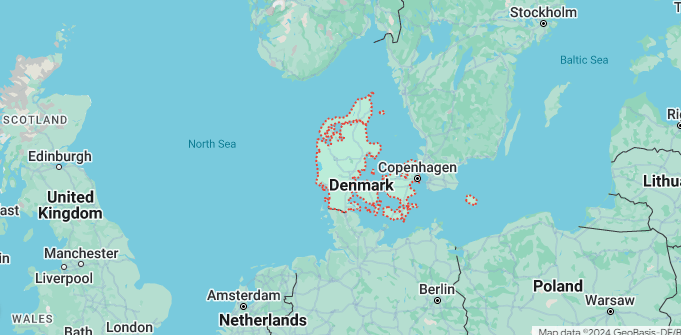
Geography:
Location: Denmark is a small country in Northern Europe, bordering the Baltic and North Seas. It consists of the Jutland Peninsula and 443 named islands.
Capital: Copenhagen.
Major Islands: Zealand (where Copenhagen is located), Funen, and Bornholm.
Territory: Denmark also includes two autonomous territories in the North Atlantic: Greenland and the Faroe Islands.
History:
Viking Age: Denmark's history is closely tied to the Vikings, who played a major role in Northern European history during the 8th to 11th centuries.
Kalmar Union: From 1397 to 1523, Denmark was part of the Kalmar Union, a political union with Sweden and Norway.
Modern Kingdom: Denmark became a constitutional monarchy in 1849. It maintained neutrality during both World Wars but was occupied by Germany during WWII.
Welfare State: Post-war, Denmark developed a highly successful social welfare state, known for its high standard of living, extensive social services, and modern economy.
Political System:
Monarchy: Denmark is a constitutional monarchy, with Queen Margrethe II as the current monarch.
Parliamentary Democracy: It has a parliamentary system, with a prime minister serving as the head of government.
EU Membership: Denmark is a member of the European Union but has opted out of certain aspects, such as the euro currency.
Economy:
Major Sectors: Denmark has a mixed economy, with strong sectors in shipping (notably Maersk), renewable energy, pharmaceuticals (e.g., Novo Nordisk), and food products (notably dairy and pork).
Currency: Danish krone (DKK).
Green Energy: Denmark is a global leader in renewable energy, particularly wind power, and has set ambitious targets to become carbon neutral by 2050.
Society and Culture:
Language: Danish is the official language. Many Danes also speak English fluently.
Religion: The Evangelical Lutheran Church of Denmark is the state religion, but Denmark is largely secular.
Quality of Life: Denmark consistently ranks high on measures of happiness, equality, and living standards. It is known for its comprehensive welfare system and strong sense of community.
International Relations:
NATO and UN: Denmark is a founding member of NATO and a member of the United Nations.
EU Relations: While a member of the European Union, Denmark has chosen to opt out of certain EU policies, including monetary union and certain defense initiatives.
Denmark is celebrated for its rich cultural heritage, environmental leadership, and social welfare system, making it a model of modern democracy.
Copyright (C) S. Midttun, 2024